
Back in April 2026, Pepsi launched something that sits somewhere between a marketing campaign and a cultural declaration. The Pepsi Football Nation campaign arrived with a simple but firm premise: outside of a handful of countries, the world calls this sport football—and Pepsi is firmly on that side of the argument. They backed it up with a browser extension that rewrites “soccer” to “football” wherever it appears on the web, plus a brand film featuring some of the biggest names in the game.
The Pepsi Football Nation Campaign: Fans Write the Rules
Football Nation is positioned as a multi-year global platform, not just a summer stunt. The launch film, created by BigTime Creative Shop and Sauvage.TV, opens with Sir David Beckham handing the playbook directly to fans and inviting them to define the rules of the Football Nation.
The campaign stars Beckham, Mohamed Salah, Vinícius Jr., Lauren James, Alexia Putellas, and Florian Wirtz—with a cameo from Gordon Ramsay that generated its own wave of social conversation. The film works through a series of fan-inspired scenarios: Wirtz getting precision-parked under VAR scrutiny, Lauren James teaching a lecture on beating the offside trap, and a string of fan-made rules like “Superstitions Are Sacred,” “You Must Wear Your Winning Jersey to Work,” and “Everything Gets Settled on the Pitch.”
The browser extension supports Rule #1: “It’s Football, Not Soccer.” Install it and every mention of “soccer” on any website quietly becomes “football.” Pepsi is also partnering with Reddit to spark ongoing fan discussions about football rituals, traditions, and unwritten rules of the sport.
PepsiCo’s Eugene Willemsen, Chief Executive Officer of International Beverages, summed it up: “Football has always gone beyond what happens on the pitch during the 90 minutes. It lives in conversations, rivalries, and traditions that bring fans together every day, across communities, markets and generations.”
Why This Is a Smart Marketing Play
There are a few things worth unpacking here beyond the spectacle of the campaign itself.
The cultural insight is genuinely strong. Pepsi didn’t manufacture a controversy—the soccer/football debate is real, deeply felt, and involves billions of people who already have an opinion. By taking a clear side, the brand creates instant alignment with a massive global majority while generating natural conversation in markets where “soccer” is still standard. That’s a much stronger foundation than most brands start with.
The browser extension is an unusually clever distribution mechanism. Unlike a TV spot or social ad that you scroll past, a browser extension changes your everyday digital environment. Every time the tool quietly swaps “soccer” for “football,” Pepsi is present—unobtrusively, but consistently. That kind of ambient brand presence is genuinely difficult to achieve through traditional media planning.
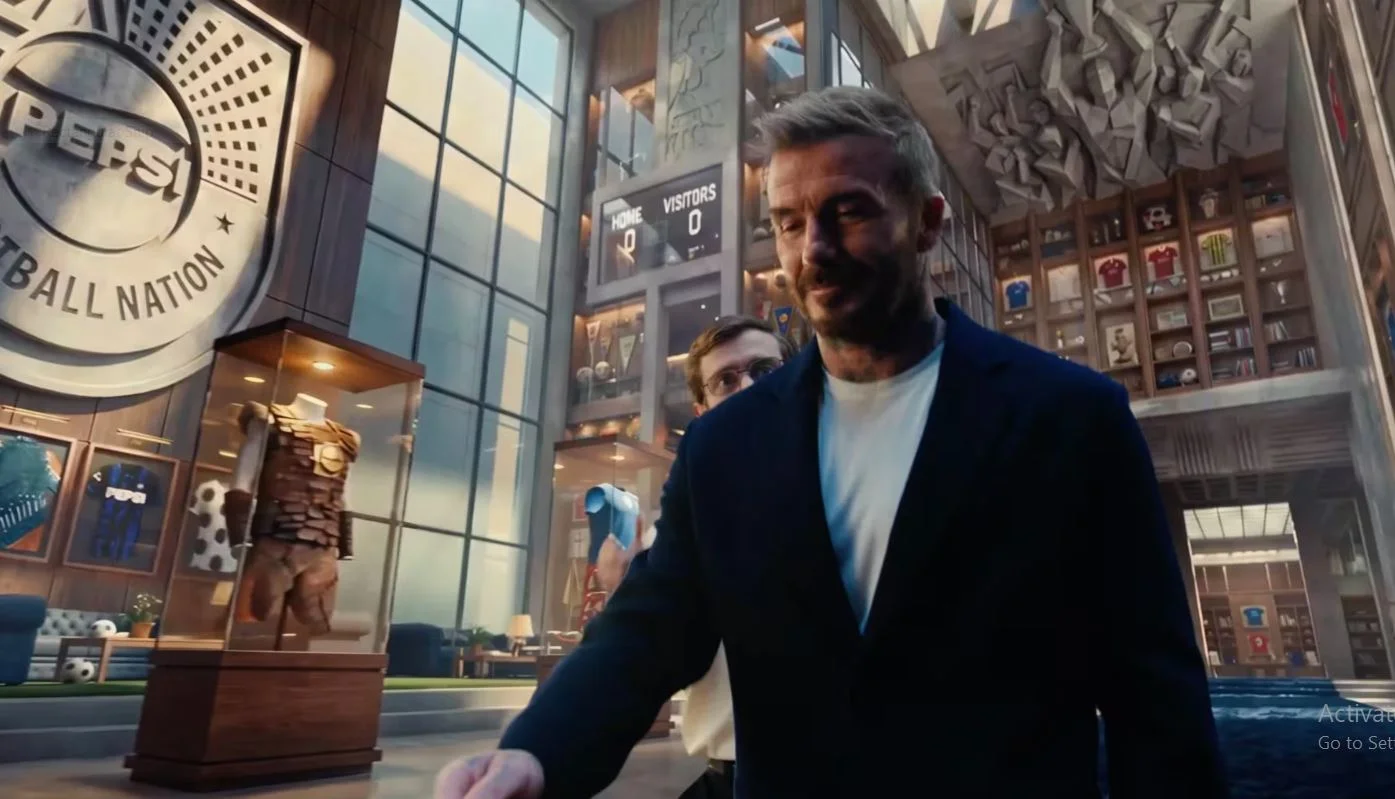
The talent lineup was chosen with real intentionality. Beckham brings cross-generational recognition. Salah and Vinícius Jr. represent two of the sport’s biggest active stars. Lauren James and Alexia Putellas speak to the rapidly growing audience for women’s football. Florian Wirtz adds the next generation. It’s a deliberately wide cast built for a global campaign, not just one market.
The Reddit Partnership: Bringing the Debate Into Fan Culture
Beyond the browser extension, the Pepsi Football Nation campaign includes a dedicated Reddit partnership—and that choice is worth examining. Reddit hosts some of the most engaged football communities on the internet. Subreddits dedicated to specific clubs, leagues, and national teams regularly generate hundreds of thousands of comments per week. Crucially, these are spaces where passionate fans debate the sport on their own terms, not because a brand asked them to.
By activating on Reddit, Pepsi is bringing the campaign into a space where the conversation already exists. The activation invites fans to post their own football rules, rituals, and superstitions—the kind of content that’s inherently shareable and self-perpetuating. Once someone posts “Rule #47: You must never leave the room when your team is winning,” others add, debate, and build on it. That’s earned media that a traditional media buy simply cannot replicate.
Moreover, this combination—a utility tool (the browser extension) plus a community platform (Reddit)—gives the Pepsi Football Nation campaign both a functional and a social dimension. It isn’t something fans see once and scroll past. Instead, it’s a campaign designed for ongoing, organic participation. That sustained engagement is increasingly rare in an era of fragmented attention, and it’s one of the stronger strategic choices in the entire initiative.
Lessons for Marketers
Pepsi Football Nation offers a few takeaways worth thinking about regardless of your industry:
- Cultural alignment beats manufactured controversy. Pepsi found a real cultural tension and chose a side. That authenticity makes the campaign feel earned rather than opportunistic.
- Technology as media, not just channel. A browser extension isn’t an ad unit—it’s a utility that quietly embeds your message into someone’s daily routine. That’s a different kind of media buy entirely.
- Global casting requires real thought. Getting the right mix of nationality, gender, sport era, and cultural recognition is a significant exercise—and Pepsi largely got it right here.
- Build platforms, not campaigns. Framing this as multi-year signals to fans that Pepsi is a committed participant in football culture, not just another tournament opportunist.
In a market where most sports marketing follows a predictable formula—find a tournament, find a celebrity, add an emotional score—Pepsi built something that invites actual participation. That’s harder to pull off than it looks. To see how other brands are approaching the same World Cup window, check out our breakdown of the week’s top World Cup marketing campaigns. For a broader picture of who is shaping marketing strategy this year, see the 2026 marketing leadership hires at OpenAI, CNN, and Chloé.
