
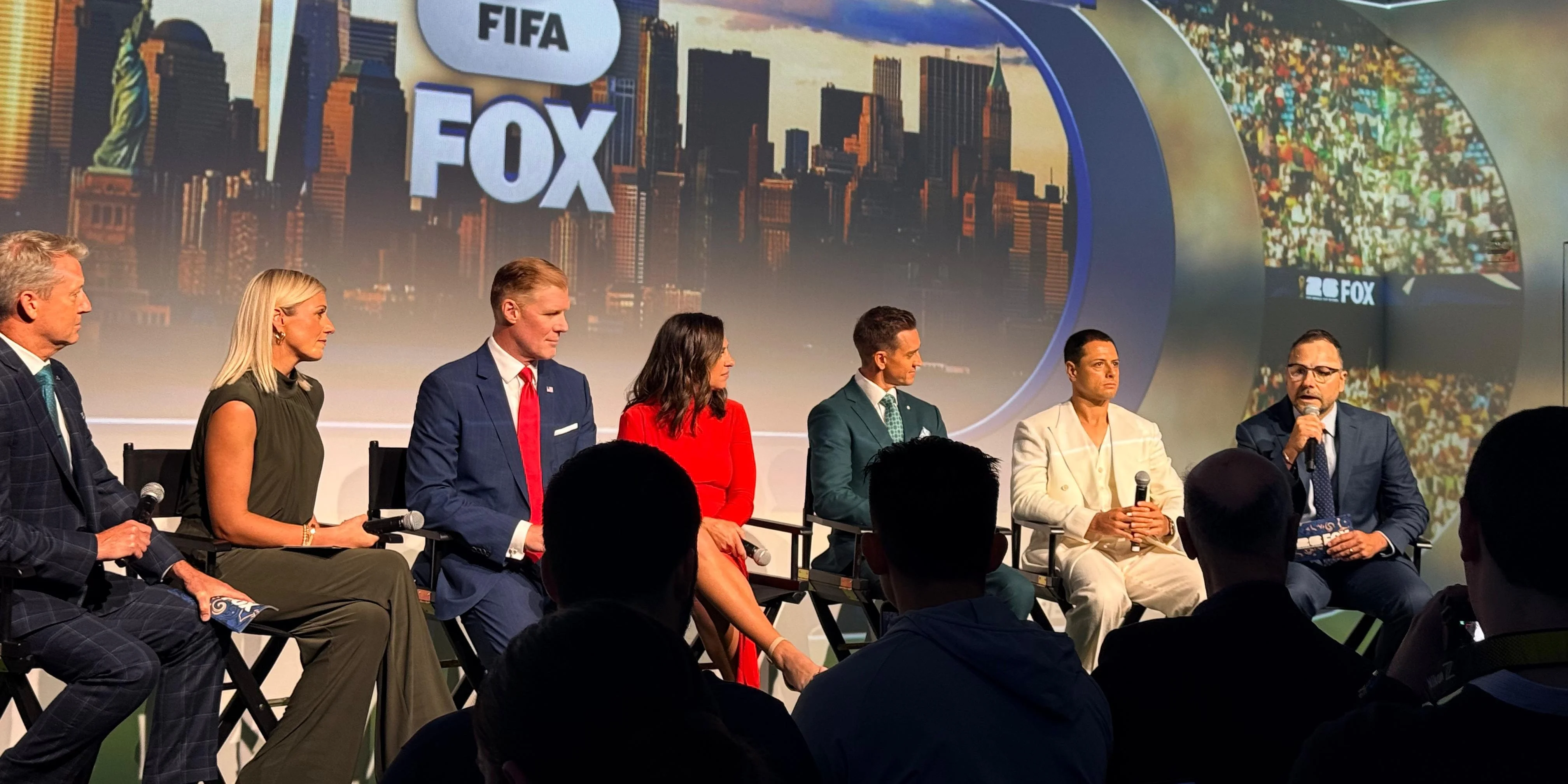
Fox Sports World Cup 2026 coverage is, by the network’s own admission, the biggest production in their history. One hundred and four matches. Seventy on FOX, thirty-four on FS1. Stadiums across the United States, Canada, and Mexico, covering multiple time zones and playing out over a month of live broadcasts. By any measure, this is a massive undertaking, and the way Fox Sports is approaching it offers a useful window into how a major broadcaster turns a global sporting event into a comprehensive marketing platform.
Fox Sports World Cup 2026: The Full Scale of the Commitment
Zac Kenworthy, EVP at Fox Sports, outlined the scope of the coverage in a conversation with Adweek: this isn’t just a tournament they’re broadcasting, it’s a full-scale production built specifically for the World Cup’s particular demands. The match count alone, 104 games spread across months, requires an infrastructure that goes well beyond what Fox Sports typically deploys for its flagship NFL or MLB coverage.
What makes this especially significant from a marketing perspective is that the World Cup, for the first time, is happening on home soil for Fox Sports’ primary audience. North American viewership for the 2022 Qatar tournament was already substantial, but the 2026 edition being played across familiar American cities creates a fundamentally different level of domestic investment and emotional connection. The audience isn’t just watching a foreign event, they’re watching their own cities and stadiums become part of the global spectacle.
That shift changes the marketing dynamic considerably. Fox Sports can lean into local storylines in a way that wasn’t possible with a tournament hosted halfway around the world. They can put cameras in host city neighborhoods, build pre-game content around local fan communities, and create a sense of shared American participation in a global moment.
Event Marketing at the Highest Level
The “biggest production ever” framing isn’t just a producer boast, it’s a marketing message in itself. By signaling unprecedented investment in the broadcast, Fox Sports is communicating to advertisers, viewers, and the broader sports media industry that this is where the World Cup lives. It’s a positioning statement delivered through production decisions rather than ad copy.
This is how the most effective event marketing tends to work at scale: the event itself becomes the campaign. Fox Sports doesn’t need to convince people that the World Cup is worth watching. What they need to communicate is that their specific coverage, the presentation, the analysis, the storytelling, the production value, is the definitive version. Every choice they make in the broadcast serves that positioning.
For advertisers considering the platform, this framing matters significantly. A broadcaster that signals deep investment in a property is also signaling that they expect viewership to be substantial, engaged, and attentive. That’s the environment every major advertiser is trying to reach, an audience that showed up intentionally and is paying full attention.
Live Sports as Advertising’s Last Reliable Stronghold
The broader context for Fox Sports’ World Cup investment is a media landscape where live sports have become an increasingly scarce and valuable asset. As streaming continues to fragment audiences and time-shifted viewing erodes traditional ad exposure, live sports remain one of the few content categories where audiences tune in at a fixed time, watch in real time, and are genuinely present for commercial breaks.
The World Cup amplifies that value. Unlike domestic sports leagues with regional fan bases, a FIFA World Cup creates overlapping fan communities from dozens of countries, all watching simultaneously. That breadth of audience, concentrated into a tournament calendar that creates natural daily appointment viewing, is an advertiser’s ideal environment.
Fox Sports is betting heavily that their version of that environment will be the definitive one for American audiences. The production scale they’re committing to is designed to make that bet pay off, both by delivering a genuinely superior viewing experience and by creating a marketing platform that justifies premium ad rates.
What Brands Can Learn from Fox Sports’ Approach
There’s a broader lesson in how Fox Sports is framing this production that applies well beyond sports broadcasting. The commitment to making something the “biggest ever” rather than just the “good enough” version of a thing is a positioning strategy, not just a production decision.
Brands that own major events or properties face the same basic choice: meet the expected standard or exceed it visibly. Fox Sports is choosing to exceed it, loudly and publicly, which serves both the broadcast quality and the marketing narrative simultaneously. The scale of the commitment signals confidence in the event’s value and in the broadcaster’s ability to deliver on it.
For marketers observing this, the relevant question isn’t “how do we do what Fox Sports is doing” but rather: where in our own category are we investing at a level that communicates genuine commitment rather than just participation? That’s the kind of investment that builds the broadcaster, or brand, into the definitive version of the thing, rather than just one of many options.
The Fox Sports World Cup 2026 commitment is ultimately a bet on the power of scale, and on the idea that the biggest possible investment in a live sports event is the most defensible position in a competitive media market. For related coverage, see our analysis of live sports ad spending through 2027 and Nike’s World Cup 2026 marketing strategy. The World Cup starts, and for a month, most of the sports world’s attention will be concentrated on these matches. Fox Sports is positioned to be the center of that attention for American audiences. Getting there required more than winning the rights, it required committing to a production that makes those rights worth having.
