
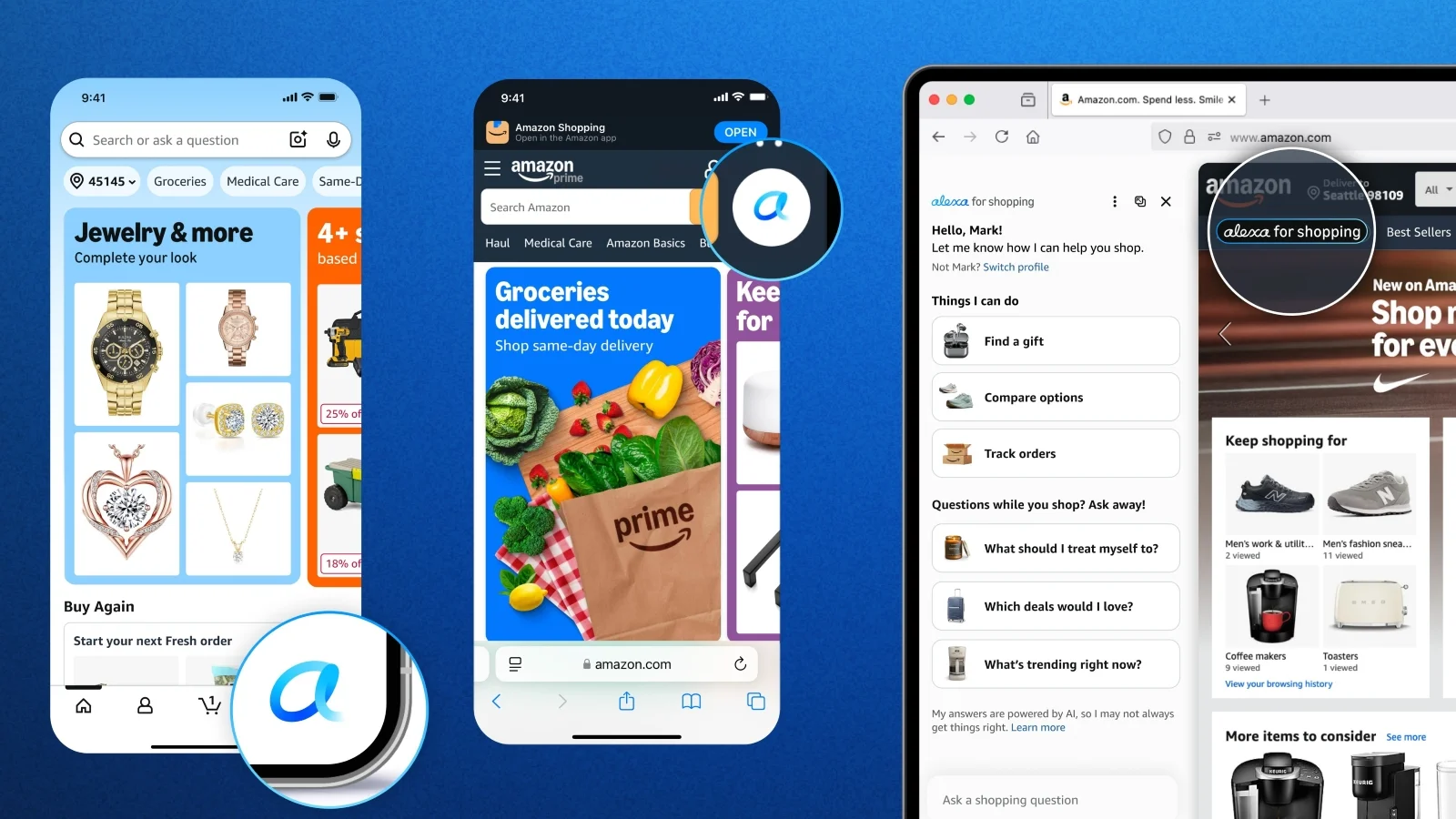
On May 13, 2026, Amazon Alexa for Shopping became the new name for the company’s AI-powered commerce assistant, and the implications for brands are more significant than a simple rebrand. The company renamed Rufus, its AI shopping assistant, launched in 2024 and built into the Amazon app, to Alexa for Shopping. The rename consolidates Amazon’s generative AI shopping capabilities under the Alexa brand, combining the product research and recommendation features of Rufus with the broader conversational intelligence of Alexa+.
For shoppers, the change is relatively seamless. For brands and advertisers, it marks the beginning of a new phase in how Amazon is thinking about the intersection of AI, voice, and commerce, and it’s worth paying close attention to what’s being built here.
What Alexa for Shopping Does for Brands
Charlotte Maines, VP of Alexa for Shopping, has described the product as a genuine shopping companion rather than a search interface. The distinction is meaningful. A search interface takes a query and returns results. A shopping companion takes context, what you’re trying to accomplish, what you already own, what your preferences are, and builds recommendations around it.
In practical terms, this means Alexa for Shopping can handle the kinds of open-ended shopping questions that traditional search doesn’t handle well: “What should I get for a teenager who’s into gaming and already has a PlayStation?” or “What’s the best way to organize a pantry without spending a lot?” These queries require understanding intent, applying judgment, and synthesizing product information in a way that search rankings alone can’t do.
The integration of Rufus’s product knowledge with Alexa’s broader conversational abilities also means the system can handle multi-turn conversations about a purchase. You can follow up on a recommendation, ask about specific features, compare options, and make a purchase, all within a single dialogue rather than bouncing between search results pages and product listings.
The Advertising Implications
The more important shift for brands is what Alexa for Shopping means for advertising within that conversational context. Amazon has been building toward voice-native advertising for years, but the previous Alexa experience was too limited for genuinely effective brand integration. A voice assistant that just reads back search results doesn’t create the kind of discovery environment where advertising adds value.
A genuinely conversational shopping assistant is different. When a customer asks for gift recommendations and Alexa suggests specific products, the mechanism of that recommendation, whether it’s driven by organic relevance, sponsored placement, or some combination, becomes a new kind of advertising real estate. The brand isn’t just bidding for position in a search result; it’s potentially being surfaced as the answer to a specific, high-intent question.
This is the direction Amazon has been moving its advertising business for several years. Sponsored Products and Sponsored Brands in traditional search results have been enormously valuable, but they operate in a context where the customer is already in active search mode. Voice-driven discovery through Alexa for Shopping opens up an earlier stage in the consideration process, the moment when someone is thinking through what they need rather than already knowing what to search for.
What This Means for Product Listings and Content
Brands that sell on Amazon need to be thinking now about how their product listings translate into the conversational context. A product listing optimized for keyword search, dense with exact-match terms, structured around algorithm signals, may not be the same listing that works best when Alexa is synthesizing recommendations for a customer.
The AI systems powering Alexa for Shopping are drawing on product titles, descriptions, reviews, Q&A sections, and images to build their understanding of what a product is and when it should be recommended. That means the quality and completeness of product content matters in a new way, not just for human readers browsing a listing, but for AI systems deciding whether to surface a product in a voice-driven recommendation.
Brands that invest in richer, more accurate, more human-readable product content will likely benefit from better representation in AI-driven recommendations. Those that have optimized purely for keyword density may find their listings less effectively surfaced in conversational contexts where natural language understanding matters more than exact keyword matches.
The Broader Shift in Voice Commerce
Amazon’s move to consolidate its shopping AI under the Alexa brand is part of a larger pattern: the major technology platforms are building AI into the front end of their commerce experiences in ways that will fundamentally change how product discovery works.
Voice is one dimension of this, but it’s not the only one. Similar AI-native shopping experiences are emerging in search. Google’s AI Overviews increasingly synthesize product recommendations rather than just linking to product pages, and in social commerce, where recommendation systems are becoming sophisticated enough to surface products before a customer has articulated a specific need.
Across all of these contexts, the underlying dynamic is the same: the intermediary between a customer’s intent and a brand’s product is increasingly an AI system making judgment calls about what to surface. Brands that understand how to be well-represented in those systems, through content quality, advertising investment, and product relevance signals, will have a meaningful advantage as this shift accelerates.
For brands selling on Amazon, understanding how Amazon Alexa for Shopping works is becoming a prerequisite for staying visible in search and recommendation results. For related developments in how AI is transforming advertising technology, see our piece on EA’s new in-game advertising platform. For more on Amazon’s own documentation of this product, visit the Amazon Newsroom. Amazon’s Alexa for Shopping is a significant early indicator of where that shift is heading. The brands paying attention now will be better positioned when it arrives in full force.
