
Amica Insurance’s marketing strategy is built on a principle that most competitors have never seriously tried to replicate: put the customer experience ahead of the advertising. There are two ways to survive in a crowded, highly competitive market for over a century. You can keep up with every trend, adapt your messaging to whatever channels and formats are currently dominant, and stay perpetually in motion. Or you can find something that works, really works, and build everything around it with relentless consistency.
Amica Insurance, founded 119 years ago, has taken the second path. And according to Tory Pachis, the company’s Executive Vice President and CMO, the logic behind that choice is simpler than most marketing strategies tend to be: empathy is their best policy.
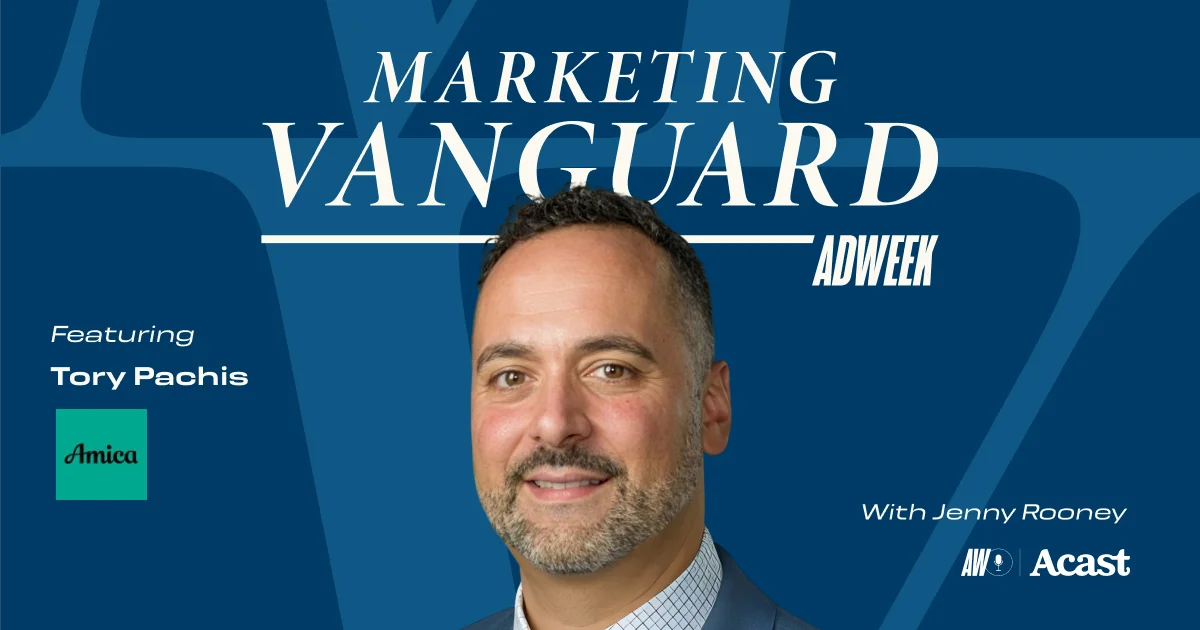
What Amica Insurance’s Marketing Strategy Looks Like in Practice
When Adweek profiled Amica as part of their Marketing Vanguard series, they described the company’s creative approach as “contrarian.” In the context of insurance advertising, that word does a lot of work. The category has become famous for mascots, jingles, celebrity spokespersons, and a kind of aggressive friendliness that tries to make buying insurance feel like a lifestyle choice. GEICO’s gecko. Progressive’s Flo. State Farm’s Jake. These campaigns are well-executed and they move the needle on brand recall.
Amica hasn’t followed that path. Their advertising tends to be quieter, more emotional, more focused on the actual experience of being an Amica customer rather than on the brand’s personality or quirks. The difference isn’t just tonal, it reflects a fundamentally different theory about what builds lasting brand loyalty in the insurance category.
Pachis’ argument, essentially, is that insurance customers aren’t primarily looking for entertainment from their insurer. They’re looking for confidence, confidence that when something goes wrong, the company will respond in a way that’s fair, fast, and genuinely helpful. All the advertising in the world doesn’t build that confidence. Actual customer experience does.
Word of Mouth as a Marketing Channel
Amica’s growth has historically been driven more by referrals and word-of-mouth than by paid media. That’s not an accident or a resource constraint, it’s a strategic choice rooted in a clear-eyed view of how insurance purchasing decisions actually work.
Think about how most people choose an insurance company. They’re not browsing options because they enjoy comparison shopping. They’re either switching after a bad experience with their current provider, or they’re taking the recommendation of someone they trust who has had a good one. The person whose neighbor had Amica and got treated well after a claim is a far more powerful influence than any TV spot.
This means that Amica’s marketing investments are, in a meaningful sense, distributed across their entire customer base. Every positive claims experience is a potential marketing moment. Every customer who would enthusiastically recommend Amica to a family member is, functionally, a member of their marketing team. That’s an asset that scales with customer satisfaction rather than with advertising budget.
It also means the floor on Amica’s marketing effectiveness is largely determined by the quality of their operations: claims handling, customer service, policy communication, and the entire experience of actually being insured. In that sense, Pachis’ role as CMO is inextricably linked with the company’s operational decisions in a way that’s less common in categories where the brand is more separable from the product.
The Creative Expression of Empathy
When Amica does advertise, the creative work tends to center on what happens at the moments that matter most to insurance customers: the call after an accident, the claim after a house fire, the reassurance that someone is genuinely looking out for you. These are not moments that lend themselves to humor or entertainment. They’re moments that call for warmth, clarity, and the quiet confidence that things will be handled well.
This is the creative expression of Pachis’ “empathy is our best policy” positioning. The advertising doesn’t try to make insurance fun. It acknowledges that the circumstances under which you need your insurance are often genuinely difficult, and it positions Amica as the kind of company that shows up differently than you might expect, more personally, more thoughtfully, more helpfully.
It’s a harder sell than a mascot, in some ways. You can’t summarize it in a tagline that plays well in a 15-second pre-roll. But it builds a different kind of trust, the kind that translates into customers who stay for decades and who actively recommend the company to people they care about.
Lessons for Any Brand Building on Trust
Amica’s approach isn’t specific to insurance. The underlying logic applies anywhere that customer trust is the primary driver of purchase decisions and long-term retention, which is, to varying degrees, most categories.
The first lesson is about alignment between marketing and operations. A brand built on trust can only sustain that positioning if the customer experience actually delivers on it. Marketing that promises empathy and service, backed by an operation that’s slow, frustrating, or impersonal, will erode trust faster than any campaign can build it. Amica’s model only works because they’ve invested in making the actual customer experience match what the marketing implies.
The second is about the patience required for relationship-based marketing to compound. Word-of-mouth and referral growth are slower than paid acquisition. The payoff, a customer base that stays longer and costs less to retain, takes years to fully materialize. Brands that measure marketing effectiveness only through short-term metrics will find this approach impossible to justify. Those willing to think in longer time horizons will recognize it as one of the most durable competitive advantages available.
Amica Insurance’s marketing strategy proves that word-of-mouth and operational excellence can outperform advertising budget at almost any scale. For more on how trust drives brand longevity, see our piece on why consumer trust trumps optimization in marketing. The Amica Insurance marketing strategy is, in short, a proof that patience and operational excellence can compound into one of the most durable competitive advantages in any category.
