
Retail is not dying, it is transforming fast. In a world where customer expectations change constantly, brands need leaders who know how to move quickly and stay focused on the customer. One of those leaders is Jennie Weber, Chief Marketing Officer at Best Buy. She recently shared her approach on Adweek’s Marketing Vanguard podcast, explaining how she is building one of the most agile and resilient marketing teams in modern retail.
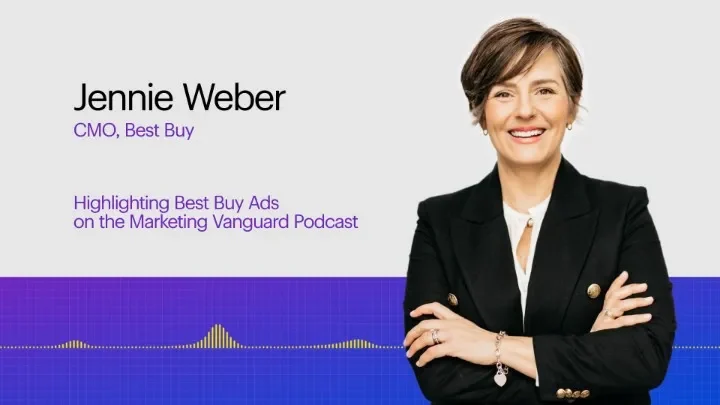
Source: Linkedin Best Buy Ads
Retail Isn’t Dead – It’s Evolving
People still want to shop in stores—but how they do it has changed. Today’s retail evolution is about blending digital convenience with in-person experiences. Customers browse online, compare prices on their phones, and then visit stores to see and test products before buying. To keep up, retailers must connect all these moments into one smooth journey.
Best Buy is a strong example of this shift. The company invests heavily in omnichannel experiences, combining its website, app, and physical stores so customers can move easily between them. This is where agile marketing becomes essential: teams must react quickly to new tech, trends, and customer needs.
The Agile Marketing Advantage
Agile marketing borrows ideas from software development. Instead of planning one huge campaign and hoping it works, teams work in short “sprints,” test ideas quickly, look at the data, and improve in real time.
This approach helps marketers:
- Respond to customer behavior right now, not months later
- Work closely across teams like data, creative, and product
- Adjust messaging, channels, and offers based on real results
For a fast-moving category like consumer electronics, where new products launch constantly, this kind of flexibility is critical.
Jennie Weber’s Vision for Best Buy
As CMO of Best Buy, Jennie Weber leads marketing strategy, execution, membership and loyalty programs, and customer insights across both the Best Buy brand and its retail media network. With more than 20 years at the company, she uses what she calls a “non-linear” approach to building a legacy brand that can still move fast and adapt.
Weber and her team focus on:
- Making customer-centricity part of the culture (even posting signs in conference rooms asking, “What do you know about the customer?”)
- Treating physical stores as experience hubs, not just places to transact
- Building a team structure that can handle constant change without losing focus
Inside Best Buy’s Smart Marketing Strategy
Under Weber’s leadership, Best Buy’s marketing strategy is about more than promotions. It is about building a connected ecosystem that keeps the customer at the center.
1. Customer-First, Data-Driven
Best Buy uses data and insights to understand what customers need at each stage of their journey. From online search to in-store visits, the company focuses on customer experience—asking how each decision solves a real customer problem.
- Example: using AI to personalize the Best Buy app home screen and improve product discovery for loyalty members
2. Best Buy Ads: A Powerful Retail Media Network
Best Buy has built a strong retail media network called Best Buy Ads. This platform lets brands use Best Buy’s first-party data and customer relationships to reach shoppers across its website, app, stores, and even streaming TV.
Recent moves include:
- Launching “We Got Next,” its first Best Buy Ads showcase to unveil new takeover packages across store interiors and exteriors
- Connecting its retail media network to social campaigns on platforms like Facebook and Instagram
This creates new revenue for Best Buy and gives advertisers highly targeted, measurable ways to reach tech-focused shoppers.
3. Seamless Omnichannel Shopping
Best Buy is considered a model for omnichannel strategy, blending online and in-store journeys.
Key elements include:
- Customers can research online, then visit stores to demo products and talk to knowledgeable associates
- Stores serve as showrooms with brand boutiques for partners like Samsung, Sony, and LG
- The app and website support personalized recommendations, order pickup, and membership benefits
Best Buy treats stores as a major differentiator versus pure e-commerce competitors.
4. Agility in Action
Weber often emphasizes that adaptability and resilience beat any single marketing strategy. Best Buy’s marketing team is structured to:
- React quickly to tech trends and new product launches
- Test and learn across channels, from retail media to social campaigns
- Pivot when consumer behavior or the market changes unexpectedly
This balance of legacy strength and modern agility helps keep Best Buy relevant.
Why Jennie Weber’s Playbook Matters to Marketers

Jennie Weber’s work at Best Buy shows what it takes to win in modern retail:
Treat physical stores as strategic assets and experience hubs, not just cost centers.
Be truly agile and adaptable, not just in words but in structure and process.
Put the customer at the center of every decision, supported by real data and insights.
Use retail media networks and first-party data to create new value for both customers and advertisers.
Best Buy proves that physical retail isn’t going away. Instead, it is becoming smarter, more connected, and more customer-centric. For marketers, the message is clear: the future belongs to brands that can move fast, think holistically, and never lose sight of the customer.